Zooskoolcom Better Instant
an early stage Building Information Modeller
for the rest of us, mere mortal architects
a little bit goes a lot further
It is free.
Download now!
an early stage Building Information Modeller
for the rest of us, mere mortal architects
a little bit goes a lot further
Have you walked away...
TAD originated at a small architect's office in India in 1989. It is a different approach to BIM (Building Information Modelling) from what you may have seen elsewhere. It is based on fundamental architectural research. It is not a software
that was derived from other engineering fields and then modified to suit architects.
Since it is so much in touch with what architects really do, it is extremely efficient in doing it. The file-sizes of this BIM software are literally in kilobytes.
At the same time it has extensive querying capabilities. The architect can actually get objectivity from quite early on -- almost from the bubble-diagramming stages. For example; quantities, area calculations, municipal (local government)
calculations and so on. Such capability can even be extended using add-ons (probes)
I know the TAD system quite well, and it is an improvement on BIM in that in enables imprecise models to be represented to a far greater extent than BIM does. This is not surprising, since TAD is actually developed for architects and for architectural design, while BIM is developed for the AEC industry broadly and is now essentially a standard (via IFCs) for the industry and architects use it for design for reasons of productivity (for the same bad reason that they were consumers of AutoCAD back in the day).

When designing, we need to be in touch with the various spaces we use. After all, we are not termites -- who live inside built matter of the walls. An architect is quite interested in knowing how the spaces are inter-related, and whether they
would work for our users. The walls come as a bye-product of having made these spaces.
TAD respects such an approach. That is why it is very easy to start designing directly in TAD itself. It is like having a scratch pad handy.
But if you think this is just a bubble diagramming too ... well, it is not. You can even create the entire model; including the built matter that is present in the building.
What it does NOT do is drafting. For that, you can easily export from TAD and use the regular CAD software that you were using earlier.
The adjoining photo shows the internal stack through the tiny row-house.
The west wall has a bit of glass blocks. It not just lights up the space
but it drives the air inside the stack. This is a intricate vertical space
that goes through the row house to provide ventilation -- all modelled
inside TAD
TAD helps you iteratively design. Like a potter at work. At any point in time, you can extract objective information such as areas, distances and so on. What is the point of designing a building only to realize at the final stages that some
mathematical criteria was not right?
This capability of querying into the design is very powerful. TAD has a built in language called "ARDELA" (ARchitectural DEsign LAnguage) That can be used to create add-ons to provide additional querying functionality. These add-ons probe into
your model and provide you answers.
We would be releasing a marketplace for these probes -- and also a simple way for you to write your own probes too
The adjoining photo, a small gazebo kind of space was carved out on the
terrace on one part of the split-level in the rowhouse. An ARDELA area
add-on (probe) did all the calculations. We were then confident that we
can get that semi-enclosed space, without it being counted by the municipality
(in India, these area calculations are known as FSI calculations)

Over 3 million of actual built projects done over last 30 years. (From the office that created TAD) Scores of unbuilt ones
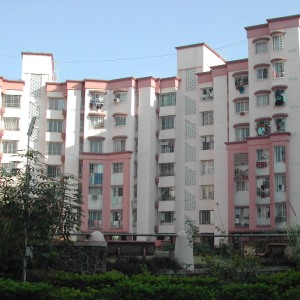
Nerul, Navi Mumbai, India

Nerul, Navi Mumbai, India
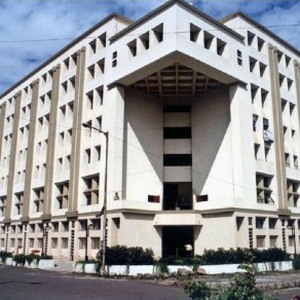
Nerul, Navi Mumbai
Repetitive, purposeless behaviors—such as tail-chasing in dogs, psychogenic alopecia (over-grooming) in cats, or cribbing in horses—often stem from a mix of environmental deprivation and neurological imbalances. Veterinary science helps differentiate whether these actions are purely psychological or triggered by dermatological allergies and neurological lesions. 3. Fear-Free and Low-Stress Handling Practices
: Veterinary science utilizes an animal's natural communication methods, such as pheromones
: Zooskool.com can prioritize accessibility and inclusivity, offering a platform that is usable by students with diverse needs and abilities. This includes features such as text-to-speech functionality, high contrast modes, and compatibility with assistive technologies.
Disclaimer: This article is for informational purposes and does not replace professional veterinary advice. Always consult a licensed veterinarian or a board-certified veterinary behaviorist for medical or behavioral concerns. zooskoolcom better
For veterinarians, the call to action is clear: Make behavior the 5th vital sign (alongside temperature, pulse, respiration, and pain). Invest in fear-free certification. Stock anxiolytic pre-visit pharmaceuticals. The days of wrestling a feral cat into submission are medically obsolete—and psychologically damaging.
A website’s design and functionality can make or break the user experience. A cluttered interface with broken links or constant pop-ups is frustrating and drives users away. This is a significant advantage for , which has a clean and organized layout. Users can easily browse and search for their desired content without being overwhelmed by intrusive elements. Many competing platforms use an “iframe” design to embed content from other sources, which creates a disjointed and often slower experience; zooskool.com, however, relies on a more streamlined architecture.
Separate waiting areas for dogs and cats prevent predatory stress. Pheromone diffusers (such as Feliway or Adaptil) are used to emit calming chemical signals. Always consult a licensed veterinarian or a board-certified
By applying behavioral knowledge, veterinarians utilize "Low Stress Handling" and "Fear Free" techniques. This involves understanding body language to recognize fear signals early, using desensitization to make procedures tolerable, and employing counter-conditioning to change the animal’s emotional association with the clinic. When a veterinary team understands that a dog freezing in the exam room is exhibiting a "shutdown" fear response rather than compliance, they can adjust their approach to prevent psychological trauma. This not only protects the animal's mental welfare but ensures the physiological data collected is reliable.
Animal behavior is not merely a subspecialty of veterinary science but a core component of accurate diagnosis, effective treatment, and long-term management of animal patients. This paper synthesizes current knowledge on how understanding species-typical behaviors, stress responses, and learning theory enhances veterinary outcomes. Key areas include: (1) using behavioral indicators for pain and illness detection, (2) reducing iatrogenic stress through low-stress handling techniques, (3) differential diagnosis of behavioral vs. medical problems (e.g., feline idiopathic cystitis vs. urethral obstruction), and (4) the veterinarian’s role in addressing behavior disorders that threaten the human-animal bond. Evidence suggests that integrating behavioral assessments into routine exams improves diagnostic accuracy, client compliance, and animal welfare.
The field continues to evolve with advancements in technology, genetics, and pharmacology. In equine veterinary medicine
Review your account settings to control who can see your activity and message you.
Beyond diagnostics and handling, veterinary science is the primary avenue for treating true behavioral pathologies. Just as the body can suffer from diabetes or heart disease, the brain can suffer from anxiety disorders, compulsive disorders, and phobias. These are not merely "bad habits" to be trained away; they are medical conditions requiring medical intervention.
In equine veterinary medicine, researchers have made significant strides in understanding the behavioral and physiological responses of horses to stress, pain, and discomfort. By recognizing the subtle signs of stress, such as ear position, tail swishing, or pawing, veterinarians can provide more effective care and management strategies, reducing the risk of behavioral problems and improving the horse's overall well-being.

For far too long, we architects have not asked ourselves how we may do a better job in this world. Instead we just relied on some outside expertise and hand-me-downs. Let us rise and think for ourselves.