|
||||||
|
|





|
|
|
Device Configuration Guides
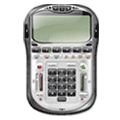
Counterpath X-Lite/eyeBeam Messaging Setup
 This configuration guide assumes that you have already followed the main setup guide and have the softphone installed and working with your voip line. STEP 1
Vjoy 2.18 -vJoy 2.1.8 is a critical device driver for Windows. It bridges the gap between physical inputs and software expectations. It acts as a virtual joystick. It translates inputs from keyboards, mice, or non-standard controllers into standard joystick signals. This guide covers everything you need to know about vJoy 2.1.8. What is vJoy 2.1.8? The Ultimate Guide to vJoy 2.18: Bridging the Gap in Virtual Gaming vjoy 2.18 vJoy , particularly version 2.18 and the active community projects surrounding it, is a testament to the power of open-source development in solving niche but crucial problems. It's an indispensable layer of abstraction that turns a rigid, physical world of input devices into a flexible, software-defined toolkit. vJoy 2 2. Remapping Non-Standard Inputs (Mouse and Keyboard to Joystick) It translates inputs from keyboards, mice, or non-standard : Emulates up to 16 devices , each configurable with up to 8 axes , 128 buttons , and 4 POV hat switches . vJoy is an open-source virtual joystick driver that allows Windows to recognize non-joystick inputs (like keyboards or custom software) as a standard game controller. Version is a legacy release often used for compatibility with older flight simulators or specific peripherals. Core Features of vJoy 2.1.8 +-------------------------------------------------------------+ | vJoy Conf (Configuration) | +-------------------------------------------------------------+ | Target Device: [ vJoy Device 1 ] <-- Select Device ID | | | | Axes: [X] X [X] Y [X] Z [ ] Rx [ ] Ry | | [ ] Rz [ ] Sl0 [ ] Sl1 | | | | Buttons: [ 32 ] <-- Set total buttons | | | | POV Hats: [ 1 ] Continuous <-- Set D-pad style | +-------------------------------------------------------------+ | [ Apply ] [ Cancel ] | +-------------------------------------------------------------+ Steps to Customize Open the application from your Start Menu. Select the target Device ID (default is 1). Check the boxes for the Axes your game requires. Input the number of required Buttons (e.g., 16, 32, or 64). |
|
|||||||||||||
|







|
Our Home Phone Service includes Internet phones with free Internet calling and unlimited US and Canada plans. We offer prepaid phone service and International DID numbers using our voice over IP system and an analog telephone adaptor (ATA). The solutions are designed for home phone service, business phone service, call shops, telemarketing firms and cyber cafes. InPhonex is proud to support Internet telephony equipment (IP Phones) including Sipura 2000, Sipura 3000, Cisco 186, Linksys PAP2 and other SIP phone adaptors. We also support Asterisk PBX, Trixbox and offer turn-key VoIP Reseller business opportunities to let entrepreneurs and businesses resell voice over Internet (VoIP) under their brand name. Copyright © InPhonex |