Pakistan Fsi - Blog
*SysInfo PST File Splitter Fully Secured Free Download.
*SysInfo PST File Splitter Fully Secured Free Download.
Know the Key Advantages of the Online PST File Splitter by SysInfo
Know in what scenarios the Sysinfo PST Split Tool is a smart choice
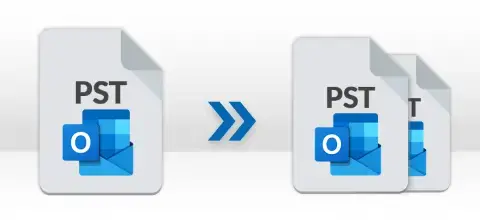
Sometimes, users look for a solution to divide their large PST files into multiple PST files. Then, by opting for SysInfo PST File Splitter open source, you can easily break the big Outlook PST files without any data loss.
Oversized Outlook PST files are more prone to corruption. Splitting PST into multiple smaller PSTs reduces the chance of corruption. The best tool to use is SysInfo PST Splitter allows users to Split large PST Files directly.
Users wish to reduce the size of Outlook data files, to manage PST data efficiently. Also, it is easy to export their data to Outlook. Hence, by using SysInfo PST File Splitter Utility, users can easily reduce the size of the oversized PST.
While the world focuses on Afghanistan, the FSI highlights a spillover effect. The resurgence of the Tehrik-i-Taliban Pakistan (TTP) in Khyber Pakhtunkhwa and Balochistan has reignited Group Grievance . The state’s inability to secure its western border—coupled with the abandonment of the 2014 military operation gains—has turned former cleared zones into no-go areas again.
For the FI and the broader policy community, the prescription is clear:
The geopolitical landscape is transforming. The US withdrawal from Afghanistan and the subsequent cooling of relations with Washington, coupled with the deepening of ties with Beijing under the China-Pakistan Economic Corridor (CPEC), has reoriented Pakistan’s foreign policy.
Both facets provide a data-driven look at Pakistan's progress and the challenges it faces in the modern era. 1. Understanding the Fragile States Index (FSI) in Pakistan
However, ignoring the FSI’s warnings would be reckless. The index’s value lies in its ability to prioritize: Without these, Pakistan will remain perpetually on the edge of the “Alert” zone—stable enough to survive, but too fragile to thrive.
With over 60% of the population under 30, the "Human Flight" indicator can be reversed if we pivot from a brain drain to a "brain gain" through local tech empowerment.
It consists of spoken dialogues, drills, and grammatical explanations.
State legitimacy, public services, human rights and rule of law, security apparatus, factionalized elites, and external intervention.
The keyword typically points toward two distinct but equally critical areas of analysis within the country: the Fragile States Index (FSI) , which tracks socio-political stability, and the Financial Stability Index (FSI) , used by the State Bank of Pakistan (SBP) to monitor economic resilience.
The "Factionalized Elites" and "State Legitimacy" indicators reflect ongoing challenges within Pakistan's political landscape. Intense polarization among political parties, frequent transitions of power, and friction between civilian governance structures and the security apparatus create an environment of policy inconsistency. This fragmentation hinders long-term regulatory and fiscal reforms. 3. Brain Drain and Human Flight
While the Pakistan Armed Forces maintain a highly capable and organized structure, the domestic security environment remains under stress. The resurgence of militant groups like the Tehreek-e-Taliban Pakistan (TTP) and Baloch separatist movements continues to challenge the state's monopoly on violence. Dealing with asymmetrical warfare requires significant national resources, diverting critical funding away from health, education, and infrastructure development. 4. Demographic Pressures and Environmental Vulnerability
Best for: Officers, students, or analysts associated with the Foreign Service Academy/Institute.
: The "Human Flight" indicator remains a concern, with over 760,000 Pakistanis seeking overseas employment in 2025 alone to escape domestic economic volatility. 3. Socio-Economic Pressures: Food & Security
Sysinfo PST Splitter Tool specifications, users can follow before use of this utility for ease of working

| Version: | 23.3 |
| Size: | 43 MB |
| License: | Multiple User |
| Release Date: | 20 March, 2023 |
| Edition: | Home, Administrator, Technician, and Enterprise |

| Processor: | Intel® Core™2 Duo E4600 Processor 2.40GHz |
| RAM: | 8 GB RAM (16 GB Recommended) |
| Disk Space: | Minimum Disk Space - 512 MB |
| Support Outlook Versions: | Office 365, 2019, 2016, 2013, 2010, 2007, 2003, 2002, 2000, 98, and 97. |
| Support MS Exchange Server: | 2019/ 2016/ 2013/ 2010/ 2007/ 2003/ 2000/ 5.5 and 5.0. |
| Supported Windows: | 11, 10/8.1/8/7/, 2008/2012 (32 & 64 Bit), and other Windows versions. |
Easy four steps to divide PST files into multiple smaller Outlook data files.


SysInfo's Award-Winning Software, Highly Rated by Experts in the Best Category.




Cnet rate a 5-star rating to SysInfo Split PST File Tool for its extraordinary performance of splitting PST files into multiple small PST. Furthermore, it recommends users use it because the utility is competent enough to maintain folder hierarchy and ignore duplicate emails with 100% accuracy. View more

SysInfo PST Splitter got 5-start by Software Suggest for its unbreakable performance to safely and securely split Large Outlook PST files (Email, calendars, contacts, tasks) into individual PST files without losing any data. View more
Use the trial version to evaluate the tool and then purchase the premium version
| Product Features | Free Version | Full Version |
|---|---|---|
| Split large PST file | 50 Items per folder | All |
| Split PST File by Size | 50 Items per folder | All |
| Split PST by Date | 50 Items per folder | All |
| Split PST file by the sender | 50 Items per folder | All |
| Split PST file by Folder | 50 Items per folder | All |
| Ignore Duplicate Email | ||
| Feature to define PST file size | ||
| Apply Password & Show Password | ||
| Date Filter | ||
| Single File and Separate PST for Selected Folder | ||
| Create Single File & Create Separate PST | ||
 |
Download | Buy Now |
While the world focuses on Afghanistan, the FSI highlights a spillover effect. The resurgence of the Tehrik-i-Taliban Pakistan (TTP) in Khyber Pakhtunkhwa and Balochistan has reignited Group Grievance . The state’s inability to secure its western border—coupled with the abandonment of the 2014 military operation gains—has turned former cleared zones into no-go areas again.
For the FI and the broader policy community, the prescription is clear:
The geopolitical landscape is transforming. The US withdrawal from Afghanistan and the subsequent cooling of relations with Washington, coupled with the deepening of ties with Beijing under the China-Pakistan Economic Corridor (CPEC), has reoriented Pakistan’s foreign policy.
Both facets provide a data-driven look at Pakistan's progress and the challenges it faces in the modern era. 1. Understanding the Fragile States Index (FSI) in Pakistan
However, ignoring the FSI’s warnings would be reckless. The index’s value lies in its ability to prioritize: Without these, Pakistan will remain perpetually on the edge of the “Alert” zone—stable enough to survive, but too fragile to thrive.
With over 60% of the population under 30, the "Human Flight" indicator can be reversed if we pivot from a brain drain to a "brain gain" through local tech empowerment.
It consists of spoken dialogues, drills, and grammatical explanations.
State legitimacy, public services, human rights and rule of law, security apparatus, factionalized elites, and external intervention.
The keyword typically points toward two distinct but equally critical areas of analysis within the country: the Fragile States Index (FSI) , which tracks socio-political stability, and the Financial Stability Index (FSI) , used by the State Bank of Pakistan (SBP) to monitor economic resilience.
The "Factionalized Elites" and "State Legitimacy" indicators reflect ongoing challenges within Pakistan's political landscape. Intense polarization among political parties, frequent transitions of power, and friction between civilian governance structures and the security apparatus create an environment of policy inconsistency. This fragmentation hinders long-term regulatory and fiscal reforms. 3. Brain Drain and Human Flight
While the Pakistan Armed Forces maintain a highly capable and organized structure, the domestic security environment remains under stress. The resurgence of militant groups like the Tehreek-e-Taliban Pakistan (TTP) and Baloch separatist movements continues to challenge the state's monopoly on violence. Dealing with asymmetrical warfare requires significant national resources, diverting critical funding away from health, education, and infrastructure development. 4. Demographic Pressures and Environmental Vulnerability
Best for: Officers, students, or analysts associated with the Foreign Service Academy/Institute.
: The "Human Flight" indicator remains a concern, with over 760,000 Pakistanis seeking overseas employment in 2025 alone to escape domestic economic volatility. 3. Socio-Economic Pressures: Food & Security
Verified Customer Reviews for SysInfo PST File Split Tool
Step 1: Install and Start the SysInfo PST File Splitter.

Step 2: Now, click on Add Files and add PST files to split.

Step 3: After adding the PST files to the software, click Next.

Step 4: Select the folders and choose the Split option as per needed.

Step 5: Choose optional features and define the destination path.

Step 6: Finally, click on Split, and the splitting process begins.