Odone Belluzzi Scienza Delle Costruzioni Pdf 13 Odone Belluzzi Scienza Delle Costruzioni Pdf 13
Odone Belluzzi Scienza Delle Costruzioni Pdf 13 Home News Planets Renderings Objects Drawings Tutorials Odone Belluzzi Scienza Delle Costruzioni Pdf 13
The Sun Mercury Venus Earth Mars Jupiter Saturn Uranus Neptune Pluto

Odone Belluzzi Scienza Delle Costruzioni Pdf 13 -

Understanding the Need for Specific Volumes (e.g., "Pdf 13")

After thorough research, of Belluzzi’s theory. Instead, the query "PDF 13" most commonly points to:

While this report provides a comprehensive analysis of Belluzzi's work and the 13th edition of "Scienza delle Costruzioni", there are limitations and potential areas for future research:

: La sua unicità risiedeva nella capacità di coniugare il rigore matematico della scuola geometrica italiana con l'intuito pratico e costruttivo del cantiere. La Struttura dell'Opera: I Quattro Volumi Zanichelli

His academic career was equally impressive. After a brief period teaching at a technical institute, he was entrusted to teach "Scienza delle Costruzioni" at his alma mater in 1928, a position he officially won in 1931. He was a man of remarkable perseverance, and his intellectual contributions were so significant that he was awarded prizes by the Alessandro Volta and Vallauri foundations. He passed away in 1956, leaving behind an unfinished masterpiece on Plasticity and Self-stressing, a testament to his lifelong dedication to the field. Odone Belluzzi Scienza Delle Costruzioni Pdf 13

The is a crucial search term for anyone diving deep into the history and theory of Italian structural engineering. Despite the advancement of computational software, the principles outlined in this 13th-edition classic remain essential for ensuring safety and efficiency in design.

Belluzzi’s approach is characterized by a "heuristic intuition" that favors direct, effective reasoning over complex matrix or index formulations. This makes his work uniquely accessible, leading many modern engineers to still refer to him as "The Master". Despite the rise of computer-automated calculations, Belluzzi's texts are still regarded as fundamental for developing the critical structural vision required of a modern engineer. Modern Availability

Scienza delle costruzioni (Vol. 3) : Belluzzi, Odone - Amazon.se

3. Why Belluzzi Remains Relevant Today (The "PDF 13" Search) Understanding the Need for Specific Volumes (e

The collection is typically divided into four major volumes, published by Zanichelli

Strutture elastiche ad arco, instabilità dell'equilibrio elastico, sistemi spaziali. Centinaia di esercizi interamente risolti a mano.

Odone Belluzzi’s Scienza delle Costruzioni is widely considered the . First published in the 1940s, this multi-volume treatise remains a cornerstone for students and professionals due to its exceptional clarity and practical approach to complex mechanical problems. Key Insights into the Treatise Storia della scienza delle costruzioni | Request PDF

A deep dive into bending, shear, torsion, and deflection of beams, which is foundational to structural design. After a brief period teaching at a technical

: The few existing PDFs of Belluzzi’s books are often low-quality black-and-white scans from the 1970s. They lack OCR (Optical Character Recognition), making them unsearchable and hard to read on modern screens.

Completato postumo grazie alla figlia e ai suoi assistenti storici.

Belluzzi is celebrated for his ability to bridge the gap between abstract mathematical theory and practical engineering application. His treatise is renowned for: Making complex concepts accessible. Rigor: Maintaining high mathematical standards. Practicality: Focusing on how structures behave under load. 2. "Scienza delle Costruzioni" - The Magnum Opus

: La trattazione dei momenti d'inerzia, dei noccioli centrali d'inerzia e delle sollecitazioni composte (flessione deviata, pressoflessione) è talmente lineare da rendere l'apprendimento immediato.

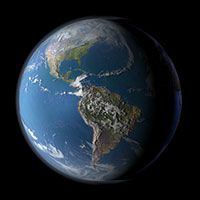
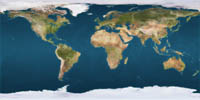
This map is a synthesis between my original earth map, gradient mapping of the USGS DEM information, hand painting, DEM modulation of detail, bathyspheric depth information, and the USGS Ocean clip. Bathyspheric data was used to modulate the color of the water so that deeper areas are a darker blue than shallow areas.
This is pieced together exclusively from the USGS DEM database. It contains landmass elevations only, with the ocean at zero, and the top of Mt. Everest at 255. Use this as a bump map to give the appearance of the Earth's rugged surface features. Some madmen have also used this data in POV Ray as a displacement map on a very finely divided sphere to produce a "true" 3D version of the Earth. The 10K version is VERY large, so make sure you really need that much detail.
This is derived from USGS DEM data, with the addition of the Arctic ice areas which do not show up on USGS data (since they are not solid land masses.) Use this to control specularity and reflectance of the ocean surface.
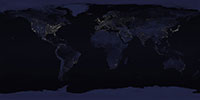
1024 x 512 color image. Very similar to the night lights map as published by NASA on their Blue Marble Page. I took their 30000 x 15000 black and white city lights map, and adapted it with a color table to a colorized version of my earth color map. This comes in 2k, 4k, and 10k versions in color, as opposed to the maximum 2k size of the NASA version of this map (higher resolution versions are available on the paid page only because of their size). Be sure to have a look at the tutorials page for a special rendering tip for using this map.
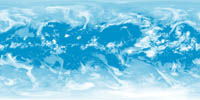
1024 x 512 color image. Based on a mosaic of satellite data, colorized, data errors retouched out, and fixed for seamless wrapping.
1024 x 512 greyscale image. Based on the same data as the color map, but leveled for the purpose of transparency mapping.

4096 x 2048 greyscale image. Built up out of real satellite imagery based upon a tutorial Dean Scott of Silicon Magic has posted. This is posted in JPEG2000 format. You need a special Photoshop plug-in to make use of jp2 images. I've thoughtfully provided a link:

JPEG 2000 Plugin from Fnord.

Odone Belluzzi Scienza Delle Costruzioni Pdf 13 -

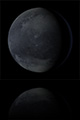
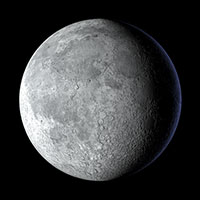
The Moon is a tricky planetoid to render. It has a very distinctive albedo which remains constant across its lit side, regardless of the angle of the surface to the sun. Therefore, standard rendering lighting models do not apply, as they always have a characteristic drop off in intensity as the angle of incidence to the light source increases. In Lightwave, there is an option to use a "non-Lambertian" lighting model on a surface setting. In previous versions of Cinema4D, you had a contrast control in the lighting setup. More recent versions of Cinema4D feature an Oren/Nayar illumination model in the lighting setup which allows you to simulate the lighting properties of "rough" surfaces. This is the method I used on the same pictured here.

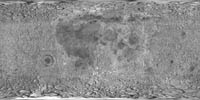
This map is based on a mosaic of satellite data, retouched for visible mosaic seams and for problems with the wrapping seam. Since this image contains highlight and shadow information independent of the location of your light source (inevitable because of how the moon is illuminated by the sun), you'll need to be careful how you light this so you don't break the illusion.

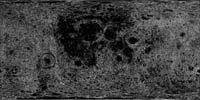
This map is my attempt to derive bump information from the above map. I did a high-pass filter operation to find all the edges of the craters, and then curved the result so that blacks and whites were white, and mid-tones were black. The results came out pretty well, as you can see from the sample image above.


this site works
best on Firefox:


website design © 2006 james hastings-trew