Local-First Worship Software
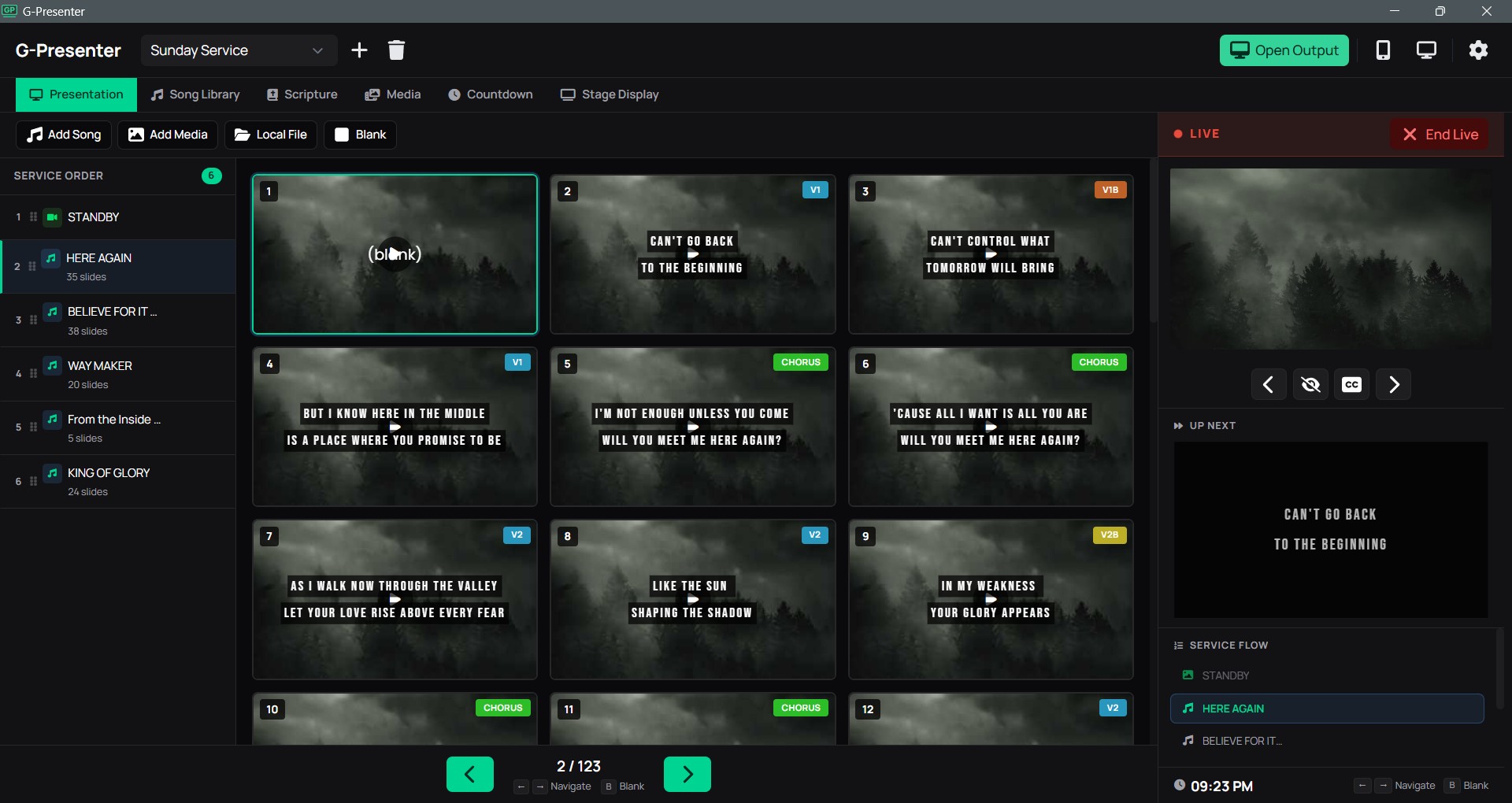
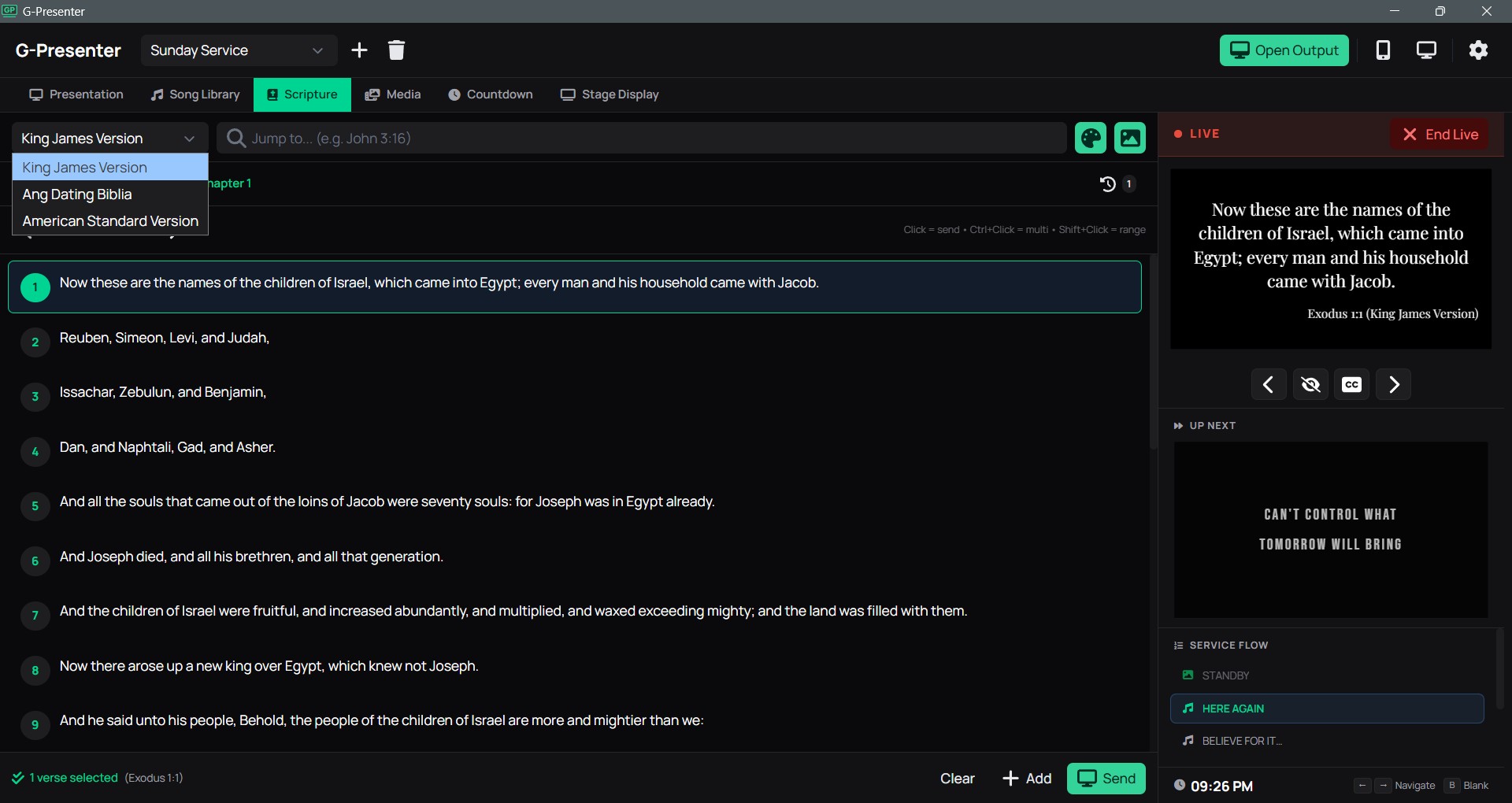
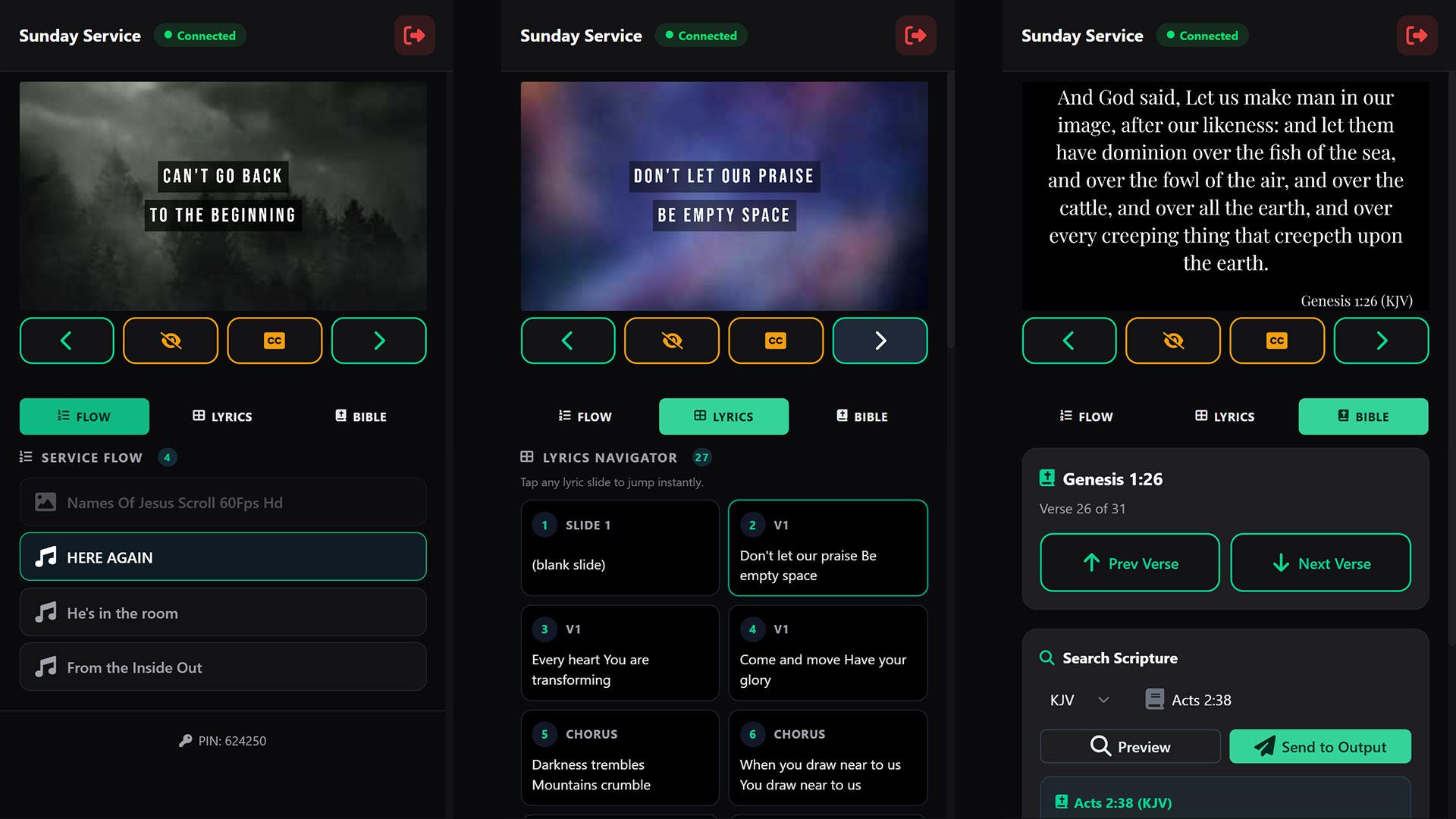
G-Presenter is a worship presentation app built for simplicity. Manage songs, display Bible verses, set backgrounds, and sync to extra screens over your local network. No account required. Nothing stored in the cloud.
No account required. No subscription.
: Landmark films like Neelakuyil (1954) and Chemmeen (1965) broke away from studio-bound melodramas. They brought the camera into the real landscapes of Kerala—its backwaters, villages, and coastal lines.
Malayalam cinema (Mollywood) is uniquely tied to Kerala's cultural landscape, often described as a mirror to the state's high literacy, political consciousness, and intellectual depth . Unlike the larger "masala" spectacles of Bollywood or Tollywood, Malayalam films are celebrated for their , narrative integrity, and focus on everyday lives. Key Cultural Pillars in Cinema Kerala, Cinema and the Measure of Cultural Confidence
Kerala's physical geography—lush green landscapes, sprawling backwaters, coconut groves, and monsoon rains—acts as an active character in Malayalam cinema rather than a passive backdrop.
Malayalam cinema remains the primary custodian of Kerala’s heritage, capturing the state's lush landscapes, distinct dialects, and the progressive, often complex, psyche of its people.
What is the or target audience for this article? Mallu Cheating Wife Vaishnavi Hot Sex With Boyf...-
The COVID-19 pandemic accelerated this trend, as the risk-mitigating model of OTT platforms gave Malayalam filmmakers creative freedom, leading to a wave of critically acclaimed films that found instant global audiences. Malayalam cinema's concept-driven, nuanced, and realistic style proved to be tailor-made for the OTT format, allowing it to reach viewers far beyond Kerala's borders. Films like The Great Indian Kitchen , Jallikattu , and All We Imagine as Light have earned accolades at major international festivals like Cannes, Toronto, and Rotterdam, cementing the industry's reputation as a global cinematic powerhouse that tells hyperlocal stories with universal resonance.
Traditional art forms and festivals are woven into film narratives. The vibrant colors of Thrissur Pooram , the rhythmic beats of Chenda Melam , and the ritualistic performances of Theyyam and Kathakali frequently drive plots. For example, Kaliyattam adapted Shakespeare's Othello against the backdrop of the sacred Theyyam ritual of North Malabar, highlighting how ancient art forms remain relevant to contemporary human emotions.
An analysis of a (e.g., Adoor Gopalakrishnan, Lijo Jose Pellissery)
To help explore this topic further, please share if you would like me to focus on a specific aspect: : Landmark films like Neelakuyil (1954) and Chemmeen
The Mirror of a Society: Malayalam Cinema and Kerala Culture
Should we include a dedicated section analyzing like cinematography and music?
2. Visualizing Landscape and Identity: The Geography of Kerala
Unlike many Indian film industries that use a standardized, neutral Hindi, Malayalam cinema revels in dialect. The slang of (punny and loud), the drawl of Kasaragod , or the sharp accent of Thiruvananthapuram defines a character before they even speak. This linguistic diversity is a core pillar of Kerala’s cultural identity. Unlike the larger "masala" spectacles of Bollywood or
These films offer an excellent starting point for understanding different facets of Kerala:
This public link is valid for 7 days and shares a thread, including any personal information you added. This link or copies made by others cannot be deleted. If you share with third parties, their policies apply. Can’t copy the link right now. Try again later.
: Unlike other regional industries, Malayalam film grew as an extension of Kerala's rich literary tradition. Early masterpieces were often adaptations of works by legendary writers like Thakazhi Sivasankara Pillai and Vaikom Muhammad Basheer. The Golden Age (1980s) : This era saw filmmakers like Adoor Gopalakrishnan Padmarajan
: Landmark films like Neelakuyil (1954) and Chemmeen (1965) broke away from studio-bound melodramas. They brought the camera into the real landscapes of Kerala—its backwaters, villages, and coastal lines.
Malayalam cinema (Mollywood) is uniquely tied to Kerala's cultural landscape, often described as a mirror to the state's high literacy, political consciousness, and intellectual depth . Unlike the larger "masala" spectacles of Bollywood or Tollywood, Malayalam films are celebrated for their , narrative integrity, and focus on everyday lives. Key Cultural Pillars in Cinema Kerala, Cinema and the Measure of Cultural Confidence
Kerala's physical geography—lush green landscapes, sprawling backwaters, coconut groves, and monsoon rains—acts as an active character in Malayalam cinema rather than a passive backdrop.
Malayalam cinema remains the primary custodian of Kerala’s heritage, capturing the state's lush landscapes, distinct dialects, and the progressive, often complex, psyche of its people.
What is the or target audience for this article?
The COVID-19 pandemic accelerated this trend, as the risk-mitigating model of OTT platforms gave Malayalam filmmakers creative freedom, leading to a wave of critically acclaimed films that found instant global audiences. Malayalam cinema's concept-driven, nuanced, and realistic style proved to be tailor-made for the OTT format, allowing it to reach viewers far beyond Kerala's borders. Films like The Great Indian Kitchen , Jallikattu , and All We Imagine as Light have earned accolades at major international festivals like Cannes, Toronto, and Rotterdam, cementing the industry's reputation as a global cinematic powerhouse that tells hyperlocal stories with universal resonance.
Traditional art forms and festivals are woven into film narratives. The vibrant colors of Thrissur Pooram , the rhythmic beats of Chenda Melam , and the ritualistic performances of Theyyam and Kathakali frequently drive plots. For example, Kaliyattam adapted Shakespeare's Othello against the backdrop of the sacred Theyyam ritual of North Malabar, highlighting how ancient art forms remain relevant to contemporary human emotions.
An analysis of a (e.g., Adoor Gopalakrishnan, Lijo Jose Pellissery)
To help explore this topic further, please share if you would like me to focus on a specific aspect:
The Mirror of a Society: Malayalam Cinema and Kerala Culture
Should we include a dedicated section analyzing like cinematography and music?
2. Visualizing Landscape and Identity: The Geography of Kerala
Unlike many Indian film industries that use a standardized, neutral Hindi, Malayalam cinema revels in dialect. The slang of (punny and loud), the drawl of Kasaragod , or the sharp accent of Thiruvananthapuram defines a character before they even speak. This linguistic diversity is a core pillar of Kerala’s cultural identity.
These films offer an excellent starting point for understanding different facets of Kerala:
This public link is valid for 7 days and shares a thread, including any personal information you added. This link or copies made by others cannot be deleted. If you share with third parties, their policies apply. Can’t copy the link right now. Try again later.
: Unlike other regional industries, Malayalam film grew as an extension of Kerala's rich literary tradition. Early masterpieces were often adaptations of works by legendary writers like Thakazhi Sivasankara Pillai and Vaikom Muhammad Basheer. The Golden Age (1980s) : This era saw filmmakers like Adoor Gopalakrishnan Padmarajan