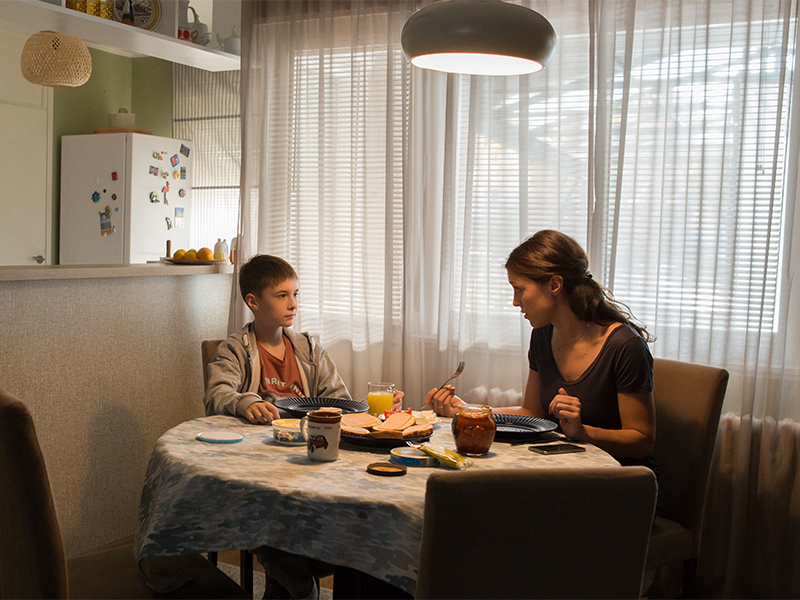

Season 3
The new season of Civil Servant explores how the country’s public servants stand up and fight when the whole world stops and everything except health and survival become irrelevant. Fighting for every breath, every respirator, and every moment of peace for their citizens has become their daily routine. Lazar Stanojevic, for whom the service is his Holy Grail, continues to fight the good fight. The new season was filmed in Belgrade and Istanbul.
Season 1&2
A young, ambitious Serbian Secret Service (BIA) agent, Lazar Stanojevic is negotiating the rules of the international spy game in the modern world. He quickly learns that all is not what it seems, and he is left fighting his distrust for everything he thought to be true. He is removed from the service, his marriage is falling apart, and he faces the greatest challenge in his career: an internet entrepreneur who wishes to destroy the entire Serbian political and security systems. Despite this professional and moral crisis, his sense of duty will propel him to make life-changing decisions to save his nation, his family, and himself. Will Lazar emerge from being a servant of the state to its ultimate protector?
IMDB: Drzavni sluzbenik
| Original Title | : | Državni Službenik |
| Genre | : | Crime, Drama, Thriller |
| IMDB Rating | : | 8.2 |
| Production Year | : | 2019-2022 |
| Run Time | : | 3 Seasons- 36 X 50' |
| Country of Origin | : | Serbia |
His films, such as Swayamvaram (1972) and Elippathayam (1981), dismantled feudal mindsets and explored the psychological anxieties of the post-colonial Malayali youth.
The turn of the 2010s sparked a massive creative renaissance, often termed the "New Gen" wave.
Malayalam cinema is a celebration of the unique culture, language, and geography of Kerala.
Films like Varavelpu (1989) and Pathemari (2015) captured the bittersweet reality of the non-resident Keralite (NRK). They exposed the pain of separation, the grueling labor conditions abroad, and the harsh realities confronting returning migrants who struggled to reintegrate into a rapidly consumerist Kerala society. The diaspora did not just provide stories; they became a massive global audience, funding high-budget ventures and expanding the cultural footprint of Kerala far beyond its geographic borders.
Kerala boasts unique demographic and social indicators, including the highest literacy rate in India, a politically conscious citizenry, and a unique religious pluralism where Hinduism, Islam, and Christianity coexist closely. Malayalam cinema reflects this environment through several defining characteristics: desi indian masala sexy mallu aunty with her husband
The transition to talkies brought a wave of films heavily influenced by Malayalam literature and theater. The 1950s and 1960s marked a golden age of literary adaptations. Masterpieces like Neelakuyil (1954), co-directed by P. Bhaskaran and Ramu Kariat, directly addressed untouchability and feudal oppression. Chemmeen (1965), based on Thakazhi Sivasankara Pillai's classic novel, won the National Film Award for Best Feature Film, bringing global attention to the industry. These films were not mere entertainment; they were instruments of social critique, mirroring the communist and progressive reformist movements sweeping through Kerala. The Mirror of Kerala's Unique Socio-Political Landscape
Filmmakers began setting stories in specific sub-regions of Kerala, capturing distinct dialects, local cuisines, and micro-cultures. Films like Maheshinte Prathikaaram (Idukki district) and Kumbalangi Nights (Kochi backwaters) treated their geographic settings as living, breathing characters. Technical Excellence on Tight Budgets
Despite its critical acclaim, the industry faces ongoing challenges. The historical lack of gender diversity behind and in front of the camera led to the formation of the Women in Cinema Collective (WCC) in 2017, a pioneering movement in Indian cinema advocating for safer work environments and gender equality. Internally, the industry constantly battles the rising costs of production against a relatively small native theater-going audience.
Cinema is the primary custodian of contemporary Kerala culture. The lush, monsoon-drenched landscapes of Alappuzha, the misty hills of Wayanad, and the bustling, multi-cultural streets of Kochi are not just backdrops; they function as living characters. His films, such as Swayamvaram (1972) and Elippathayam
Are there any you want to emphasize? Share public link
Moreover, the diaspora (Malayalis in the Gulf, US, and UK) now heavily influences content. Plots about NRIs (Non-Resident Indians) longing for "home" are clichés that reflect a cultural obsession with migration and the guilt of leaving the motherland.
The first talkie movie in Malayalam. It introduced the language's unique phonetic identity to the screen. The Realist Shift
Films like Neelakuyil (1954) and Chemmeen (1965) revolutionized the narrative landscape. Neelakuyil directly addressed the evils of the caste system and untouchability, mirroring the socio-political reforms sweeping through Kerala at the time. Chemmeen , based on Thakazhi’s masterpiece novel, explored the rigid social taboos of coastal fishing communities. It became the first South Indian film to win the National Film Award for Best Feature Film, proving that culturally specific stories could achieve universal acclaim. The Golden Age: Parallel Cinema and Superstardom Films like Varavelpu (1989) and Pathemari (2015) captured
The COVID-19 pandemic and the subsequent boom of Over-The-Top (OTT) streaming platforms acts as a catalyst. Audiences across India and the globe discovered films like The Great Indian Kitchen (2021), a blistering critique of patriarchy entrenched in everyday domestic chores. Malayalam cinema was no longer a regional secret; it became a global benchmark for quality content. Cultural Aesthetics: Music, Language, and Landscape
For decades, Indian cinema was defined by two monolithic poles: the Bollywood song-and-dance spectacle of the North and the arthouse realism of Satyajit Ray in the East. The South was often reduced to the hyper-stylized, logic-defying "masala" films of Tamil and Telugu cinema. But nestled in the lush, rain-soaked landscapes of Kerala, a quieter, more profound revolution has been unfolding. Malayalam cinema, or 'Mollywood', has quietly shed its regional label to emerge not just as an industry, but as a cultural benchmark—a cinema of devastating realism, sharp social commentary, and an almost uncomfortable intimacy with the human condition.
For any outsider looking to understand the political fights, the family honor, the religious tolerance, and the specific humor of Kerala, do not read the history books first. Watch Kireedam , Vanaprastham , Kumbalangi Nights , and The Great Indian Kitchen . In those frames, you will see the true face of Malayali culture.
The widespread adoption of Over-The-Top (OTT) streaming platforms during the pandemic propelled Malayalam cinema into the global spotlight. International audiences began discovering the industry's unmatched ability to generate high-concept, low-budget thrillers ( Drishyam , Joji ) and visceral, chaotic human dramas ( Jallikattu , Angamaly Diaries ). Socio-Cultural Evolution and the Road Ahead